Photos
These pictures were taken in July of 2011, in our last camp of the season, near Whitecourt, Alberta.

Chloe and Laura, bagging up.

A cache.

Our office trailer location summary board.

A deer, sunning himself in a burn.

A cache on Sean's block.

A dirty quad.

A skidder being used as a mounder.
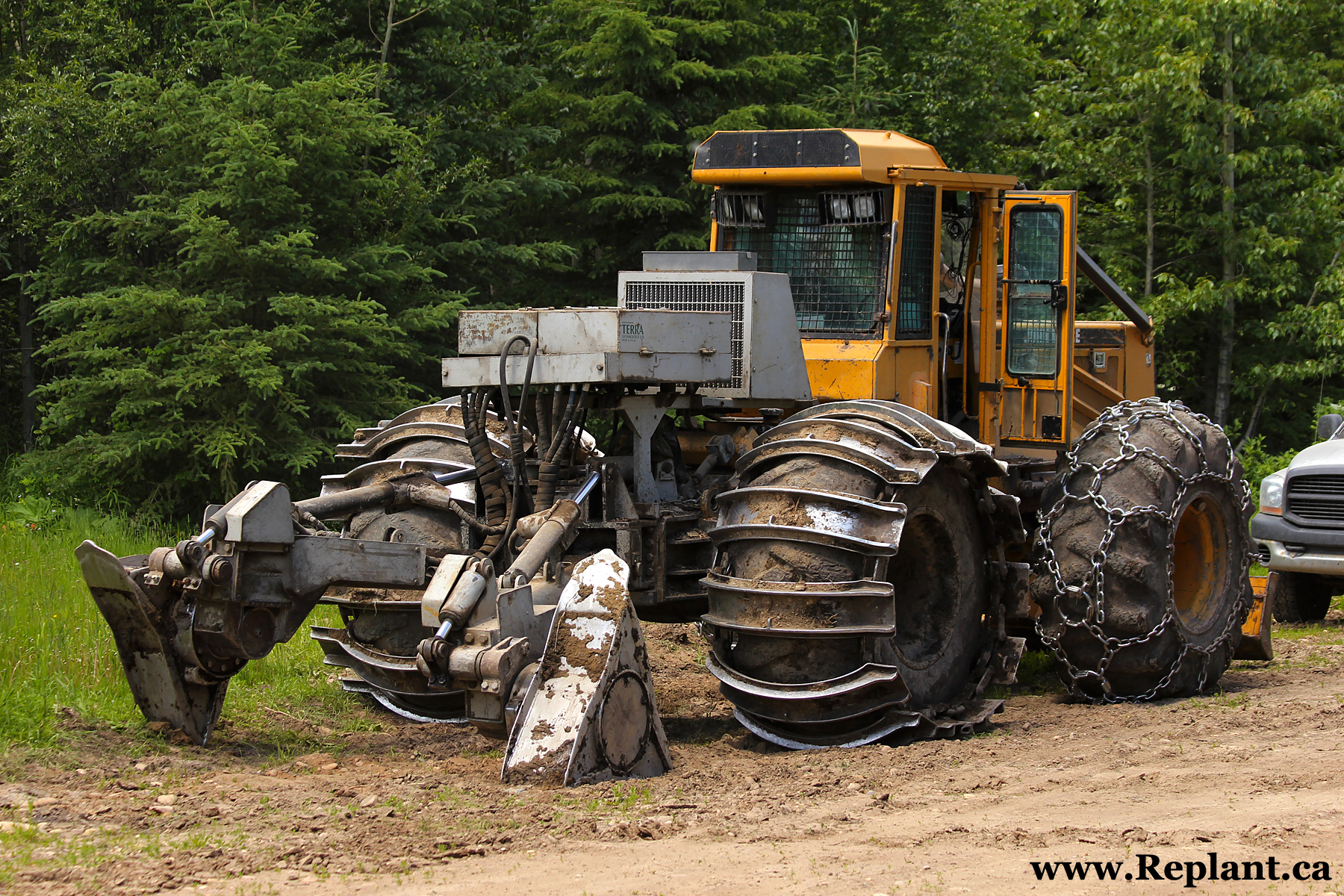
The back end of the same skidder, with the attachment that makes the mounds.
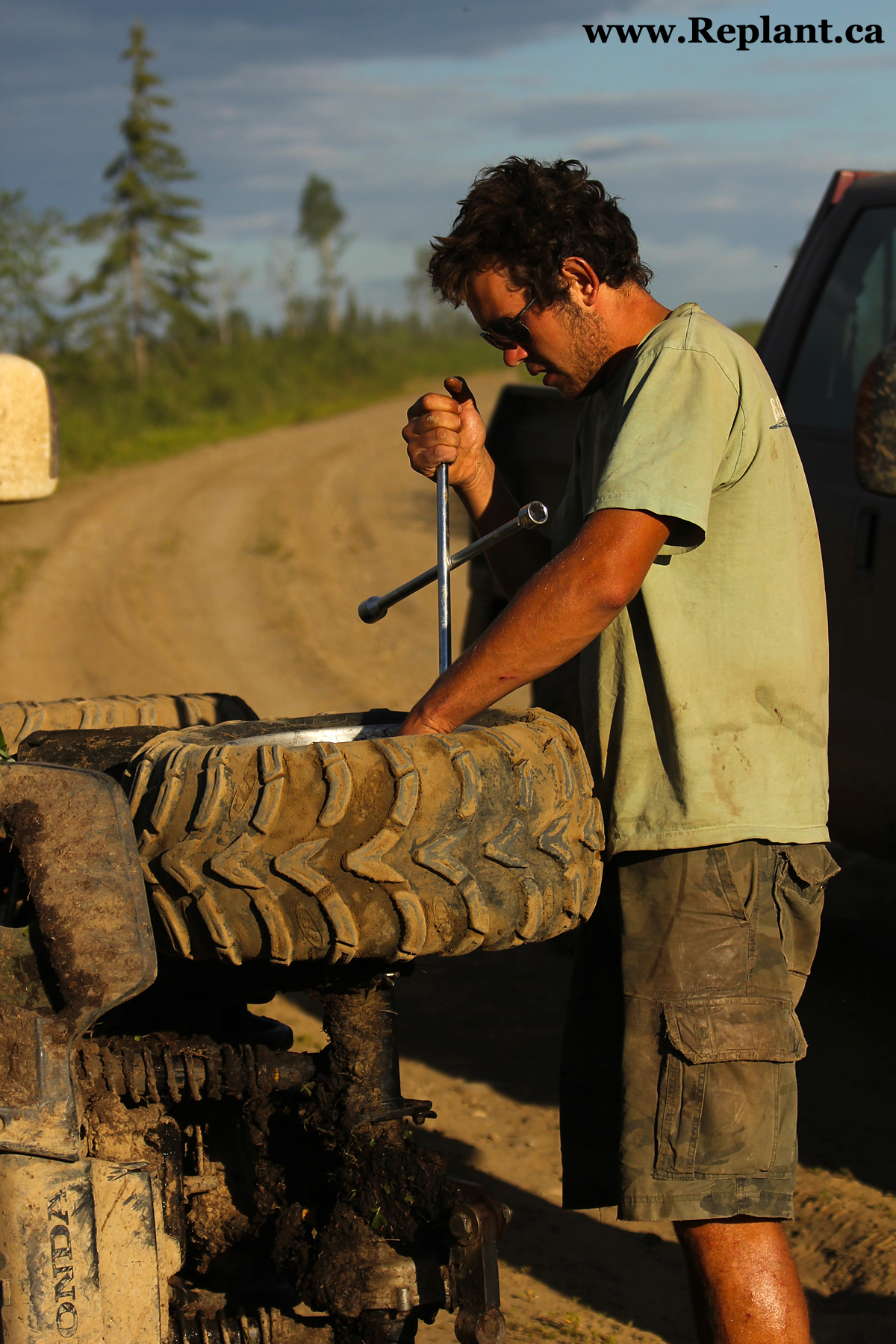
Mike, changing another quad tire.
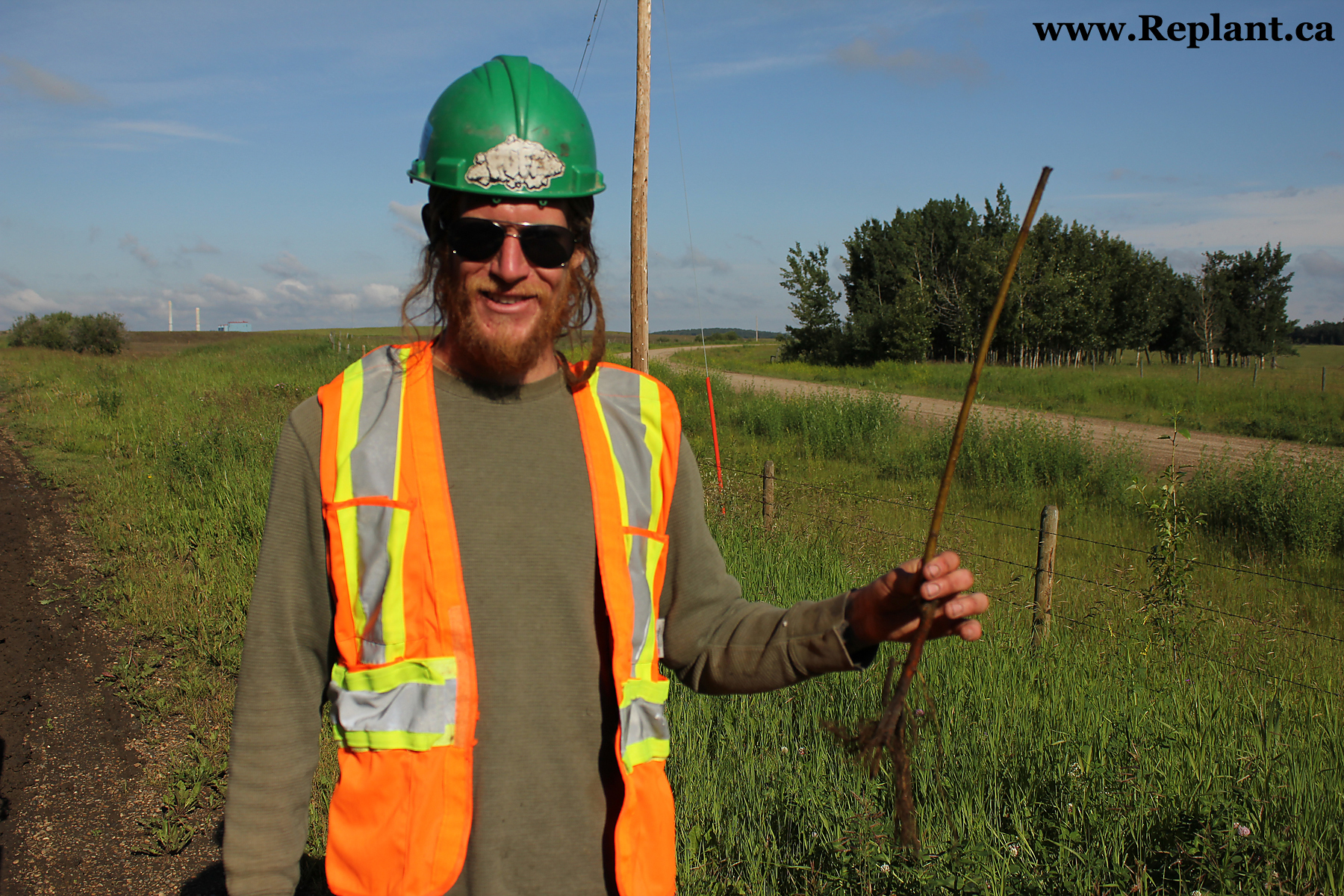
Paddy, holding up a bareroot cottonwood tree.

One of our blocks, viewed from the air.
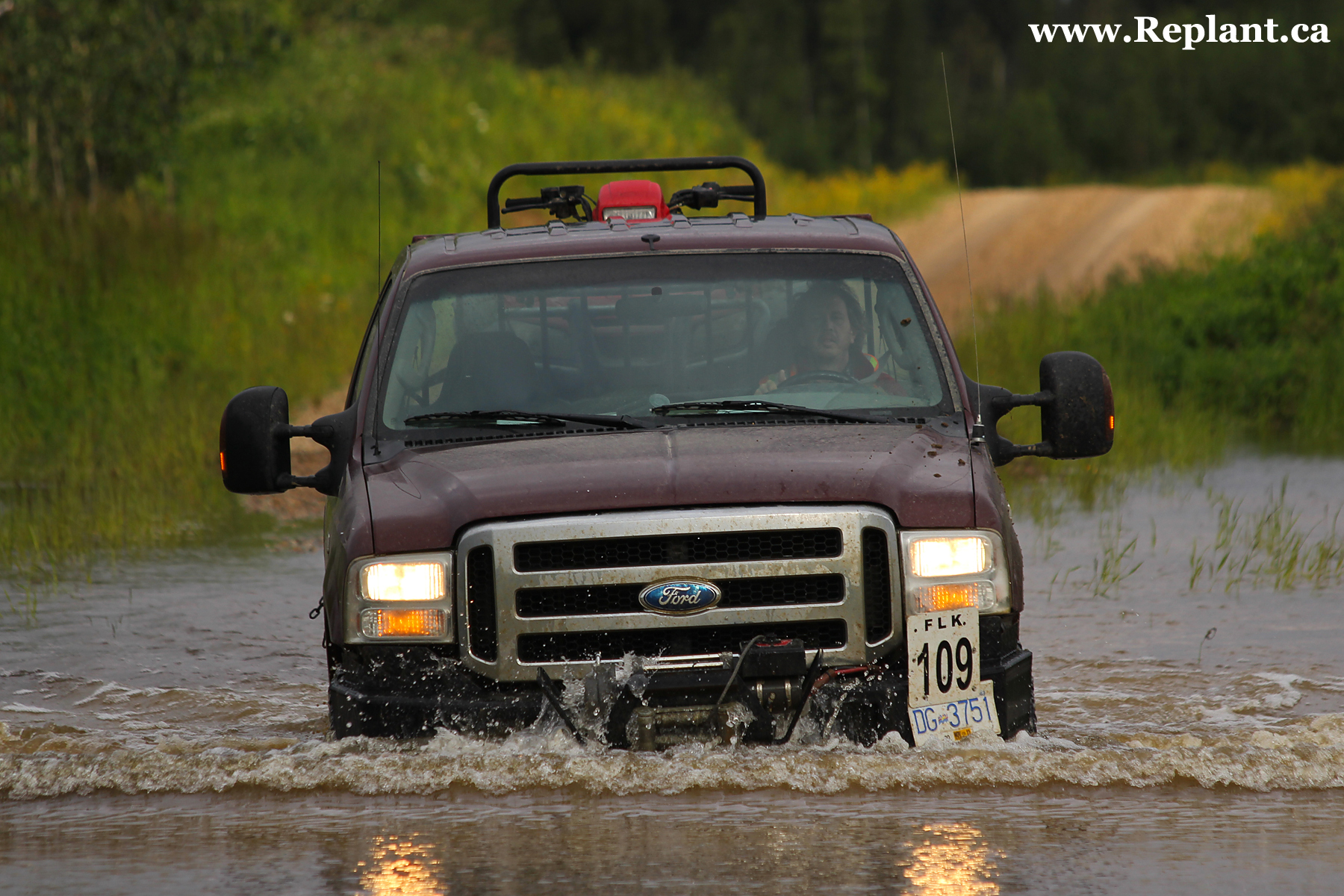
We had some heavy rains, so we got some minor flooding on some of our roads.

Trees in one of our main shade caches.

In other areas near us, roads washed out entirely.

Sean, taking tallies at the end of the day.

Three guest planters from Rich's camp, who joined us for a day when their own camp couldn't work due to washed-out roads.

More flooding.

This was odd. My bumper ripped off when we were giving a really light pull to another truck that was sliding on a slick road. I felt like we could have ripped it off the truck with our bare hands. And yet, we were doing extremely heavy winching with it just a few days before. The winch work must have weakened it immensely.

An excavator, being used to fix roads into the blocks.

Another washout on one of our roads.

Dusty.

Grabbing boxes from the main cache.

Laura.

Tom.

Zach, Luther, and Laura, loading their truck.

One of the photo radar trucks, set up in Whitecourt. There were usually two or three of them positioned around town. This was good, because it really kept everyone in Whitecourt from speeding (most of the time).

We got a spare truck from one of the other camps, and the day after we got it, the "water in diesel" light came on. I drained the filter and this mess came out. I am scared to think of what the previous drivers were doing to make this mess. The brown stuff is actually muddy water that was in the truck's fuel tank.

Wilson, cleaning some garbage off a block.

Jim Logan, walking out of a block that he had been inspecting.

We found a broken big-screen TV on one of our blocks. Strangely enough, this happens pretty frequently. People seem to like to use them as targets for rifle practice. Anyway, Sean and I lugged it back to my truck so I could take it to the dump.

Kelly Duduman, one of my former foremen from about ten years ago, came to visit for a couple days this season. He works in Edmonton for Canada Post, and so he likes to join us for a few days each summer to keep in touch with the planting industry. It's always good to have him visiting, due to his cutting edge sarcasm and humour. This year, however, he stepped it up a notch and brought along the "Plantatron 2000," designed to somehow revolutionize the planting industry.

Here's the Plantatron 2000 up close. Unfortunately, a still photo doesn't do justice to what happens when you actually plug it in. However, since there are no plugs on our blocks, it still needs some design refinements.

Walking into one of our blocks that was about three quarters of a kilometer off the road. And what a walk. There was a wet area that we had to cross that came up to my waist, which was a bit ridiculous.

Some of Mike's crew, setting up a cache in the morning.

Early morning dust in the air on one of our blocks, created by the constant stream of logging trucks driving past.

A couple days worth of garbage.

A crazy storm one night.

Another one of our blocks at Millar Western. It's a pretty brutal contract at times, very green and challenging.

Setting up some slings of trees to fly into the blocks.

Zach.

Fruit, in the kitchen at breakfast.

Loading a group of planters into the helicopter.

The main rotor assembly of our helicopter.

The tail rotor of the helicopter. These things kill people all over the world, quite frequently. Never walk near the back end of the helicopter. When it's running, it spins so quickly that it becomes invisible.

The carousel. This one was handier than using a single-point at the bottom of our long-line, because it had six numbered hooks, making it possible to carry several slings at once.
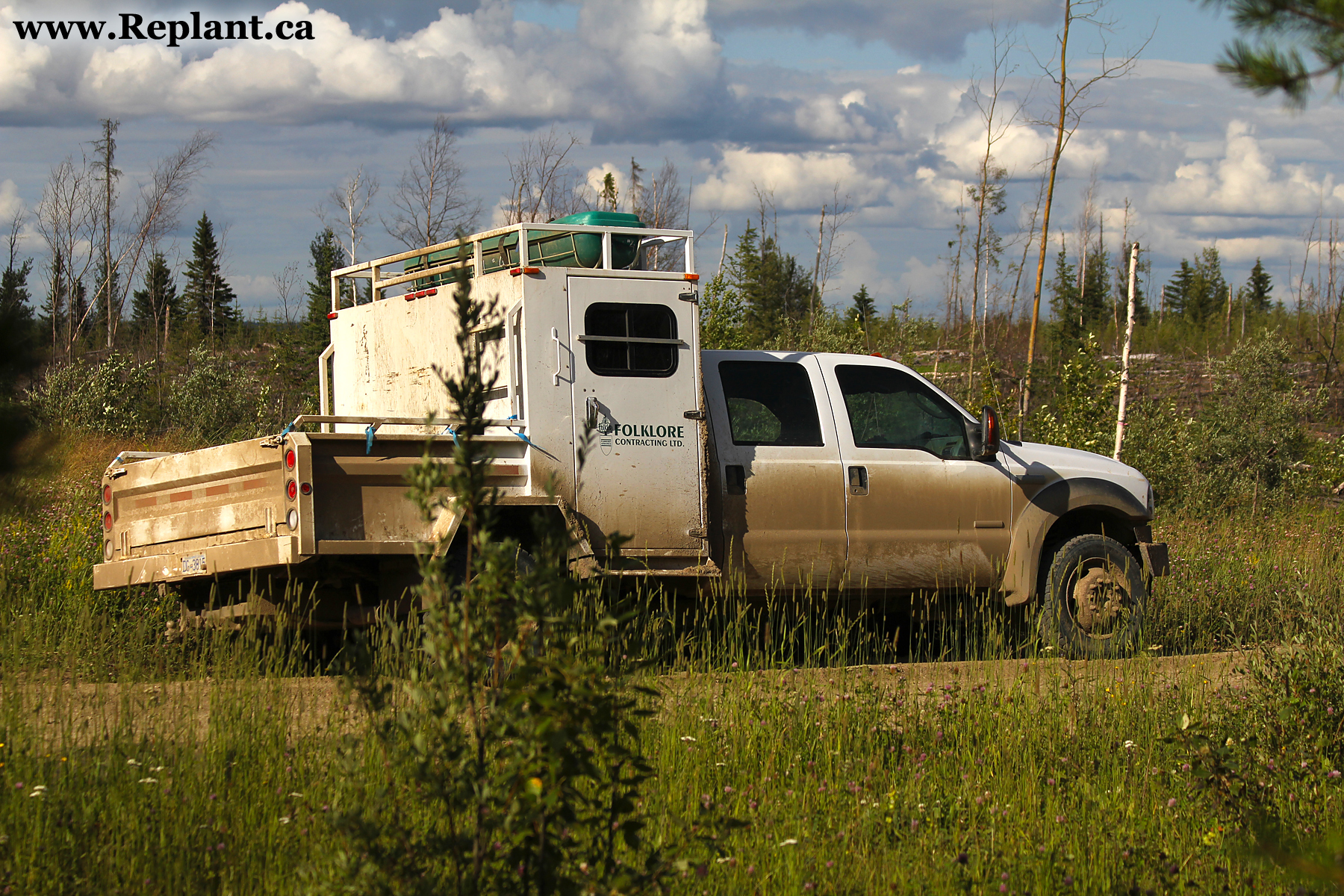
Jeremy's crummy.

A bridge in the Two Creeks area. This one started to get destroyed in the flooding, by some trees being washed up against it.

Planters enjoying their coffees in the sun at breakfast, before heading out to the blocks.

Ariane.
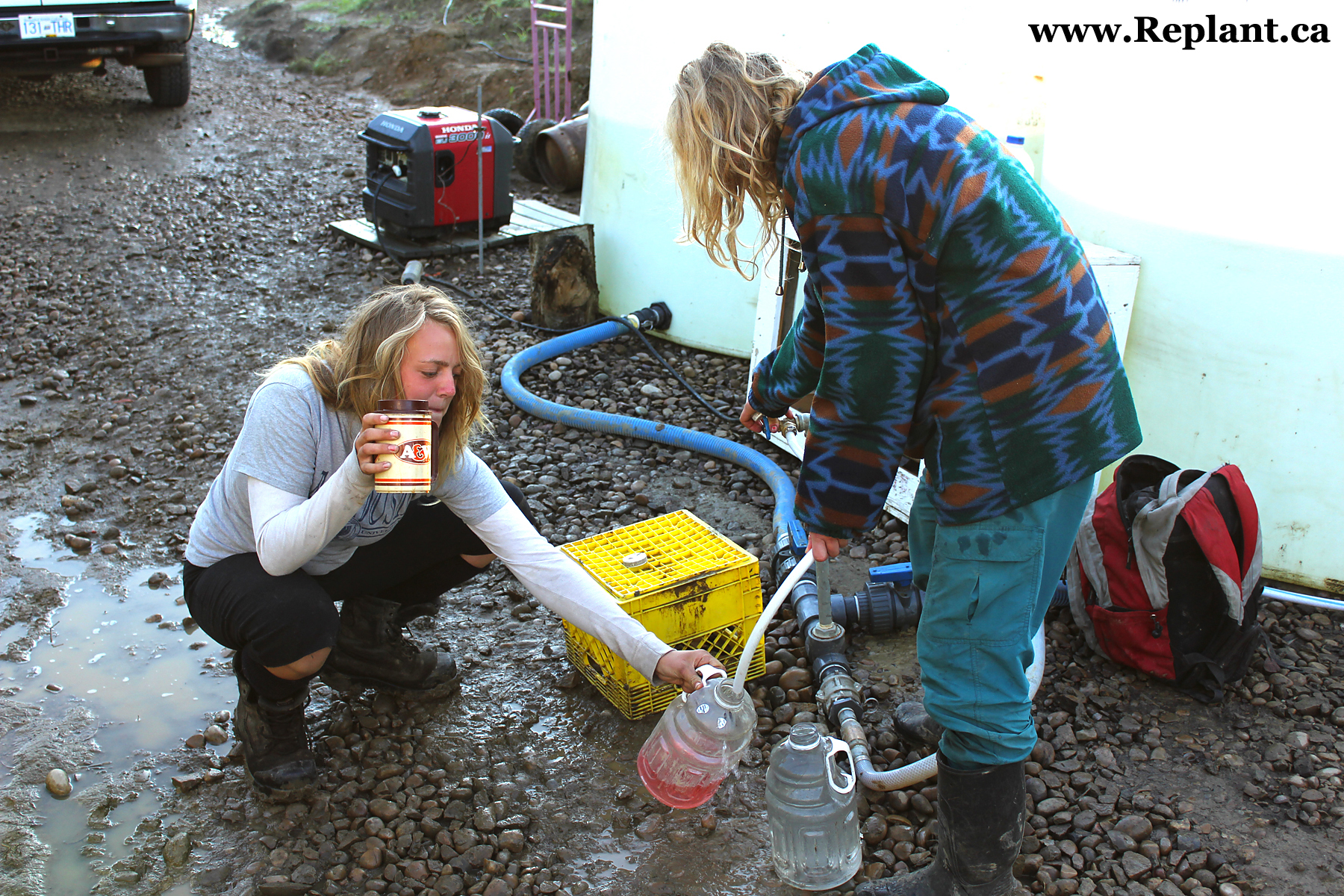
Haley and Leslie, filling water jugs in the morning.
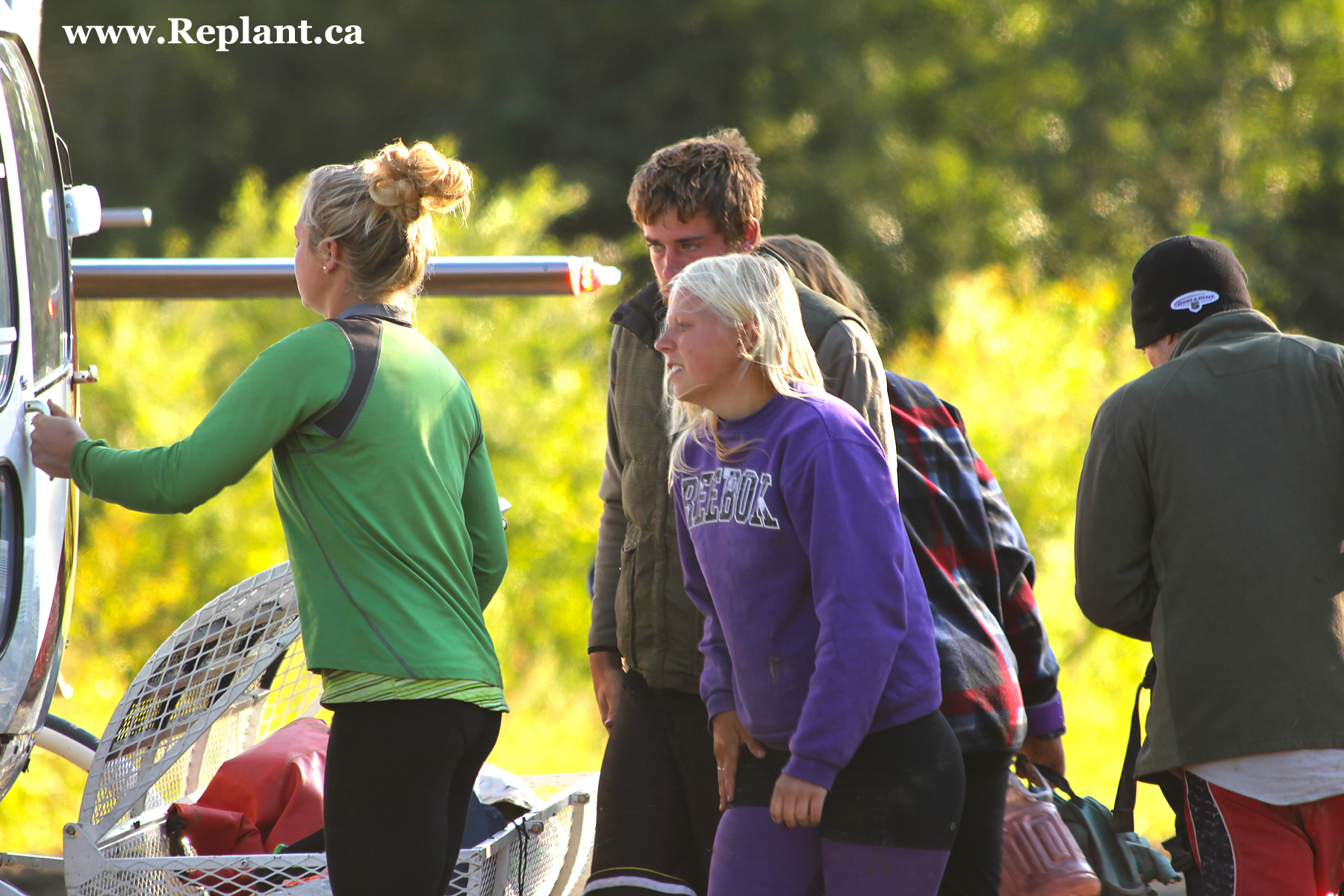
Getting ready for a flight.

Joanne, gridding out a block and waiting for the helicopter to pick her up.

More boxes, about to be slung into a block.

Luke. Luke actually works for Brinkman, not for Folklore, but we shared a block with Brinkman one day so I got a photo of him. Luke and I bartend together in New Brunswick in the off season.

The Big Box got stuck on this block, so we chained up a bunch of trucks together to tow him out. It's amazing what you can pull out with four trucks all hooked in a row, just by having every truck move really slowly under constant power, with no jerking.